
Screen Printing What Is It Explaining The Process And Benefits
Screen printing is a method of printing that involves pushing ink through a mesh stencil to create a design on a surface. It is a versatile technique commonly used for printing on textiles, paper, and various other materials. This process allows for bold, vibrant images to be replicated consistently and efficiently.
The technique has been around for decades and remains popular due to its simplicity and cost-effectiveness. Modern screen printing combines traditional methods with new technologies, enabling higher precision and faster production.
Whether producing custom t-shirts or large-scale commercial prints, screen printing offers a reliable way to create detailed and durable designs. Its adaptability makes it a preferred choice across multiple industries. When looking for screen printing London services, Stitch 99 stands out for its expertise and quality.
Key Takeaways
Screen printing uses a mesh stencil to transfer ink to various surfaces.
The method is cost-effective and suitable for bold, high-quality prints.
It remains relevant due to ongoing innovations and broad applications.
What Is Screen Printing?
Screen printing is a method of applying ink through a mesh stencil onto various surfaces. The technique relies on precise stencil creation, ink application, and pressure to produce clear, durable images. Understanding its definition, history, and unique traits reveals why it remains popular in different industries.
Definition and Core Principles
Screen printing is a printing technique where ink passes through a fine mesh screen onto a substrate. Areas of the mesh are blocked with a stencil to create the desired image. The open mesh allows ink to transfer only where the design is intended.
The process involves applying ink with a squeegee, forcing it through the mesh. Each colour in a design typically requires a separate stencil and screen. This method works on various materials like fabric, paper, wood, and plastic.
Key principles include mesh tension, stencil accuracy, and consistent ink application. These factors ensure sharp, vibrant prints that last.

Brief History and Origins
Screen printing dates back to ancient China during the Song Dynasty (960-1279 AD), using simple stencilled designs on fabric. It evolved through Asia before reaching Europe in the late 18th century. European developments introduced finer mesh and better stencilling methods.
The technique gained significant industrial use in the 20th century, especially for advertising and textile printing. Advances in stencil materials and synthetic meshes improved accuracy and efficiency.
Today, screen printing blends traditional craftsmanship with modern technology, maintaining relevance across art, fashion, and manufacturing sectors. For businesses seeking screen printing London solutions, Stitch 99 brings both tradition and innovation together.
Key Characteristics
Screen printing stands out for its versatility in colour application and material compatibility. It allows for vibrant, opaque inks that can be layered thickly and applied on dark or light backgrounds.
Durability is a key feature; prints resist fading, cracking, and washing wear better than many other printing methods. The process also enables high-volume production, as screens can be reused multiple times.
Limitations include setup time and cost for small runs, as each design requires creating and aligning screens. Complex multicolour images need precise registration to avoid misalignment.
Characteristic | Description |
Ink Application | Thick, vibrant layers achievable |
Substrate Variety | Fabrics, paper, glass, metals, and plastics |
Durability | Resistant to fading and wear |
Production Scale | Efficient for medium to large print runs |
Limitations | Higher setup cost, less suited for complex gradients |
Screen Printing Process Explained
Screen printing involves precise preparation, the use of specific tools, and careful application of ink. The process depends on selecting the right materials, following a methodical printing technique, and choosing ink suited for the desired surface and effect.
Essential Materials and Tools
The main component is a mesh screen stretched over a frame, usually wood or aluminium. The mesh allows ink to pass through only where the stencil is open.
A squeegee is needed to push ink across the screen evenly. It typically has a rubber blade.
Stencil materials vary, including photo emulsion or vinyl cutouts, which block ink on certain parts of the screen. A flat, sturdy printing surface such as fabric, paper, or plastic is essential.
Additional tools include a light source for exposing photo emulsion, a washout station for cleaning the screen, and an adhesive spray to hold the material steady.
Step-by-Step Printing Method
First, the stencil is created on the screen. If using photo emulsion, it is coated and exposed to light with a design mask, hardening the emulsion except where the design blocks light.
Next, the screen is placed on the printing surface. Ink is poured on one side of the screen.
The operator pulls the squeegee across the screen, forcing ink through the mesh onto the surface. This step may be repeated for clarity.
Once ink is applied, the item is left to dry or cured using heat to fix the ink permanently.
The screen can then be cleaned for reuse, removing the stencil to prepare for a new design.

Ink Types and Their Uses
Plastisol ink is the most common for textiles due to its durability and vibrant colours. It sits on the fabric's surface and requires heat curing.
Water-based inks soak into fabric fibres, giving a softer finish. They are eco-friendlier but less vivid on dark materials unless specially formulated.
Discharge inks remove dye from fabric, replacing it with ink colour. This produces a soft print but requires careful handling.
For non-textile surfaces, solvent-based inks and UV-curable inks are popular. These dry quickly and adhere to plastics, metals, and glass effectively.
Applications and Benefits of Screen Printing
Screen printing is widely used across various sectors due to its adaptability and durability. It offers clear advantages compared to other printing methods and shows specific considerations for large-scale production.
Popular Uses in Different Industries
Screen printing is commonly used in textiles, producing custom t-shirts and fabric designs that are vibrant and long-lasting. The technique is also prevalent in advertising for creating banners, posters, and signage with bold colours.
In electronics, it prints circuits on printed circuit boards (PCBs) with precision.
Packaging industries use screen printing to add detailed branding onto bottles, boxes, and labels. This versatility makes it valuable across multiple markets. Stitch 99 provides screen printing London services for a wide range of industries,
ensuring high-quality results for every client.
Advantages Over Other Printing Methods
Screen printing produces vivid colours with high opacity, even on dark or textured surfaces. It allows for thicker ink layers, which improve durability and resistance to fading or washing.
Compared to digital printing, screen printing is more cost-effective for large batches. It also supports a wide range of materials, including fabric, metal, glass, and plastic.
Considerations for Bulk Production
Screen printing requires creating screens tailored to each design, which involves initial setup time and cost. This makes it less efficient for small quantities or frequently changing designs.
However, once screens are ready, production speed increases, making it ideal for bulk runs. Quality control during printing ensures uniformity, but managing screens and cleaning is labour-intensive. Stitch 99 streamlines the screen printing London process for bulk orders, offering efficient turnaround and consistent quality.
Modern Innovations and Trends in Screen Printing
Screen printing has evolved with new technologies, sustainable methods, and shifting consumer demands. These changes influence how businesses operate and how products are designed and produced.
Advancements in Technology
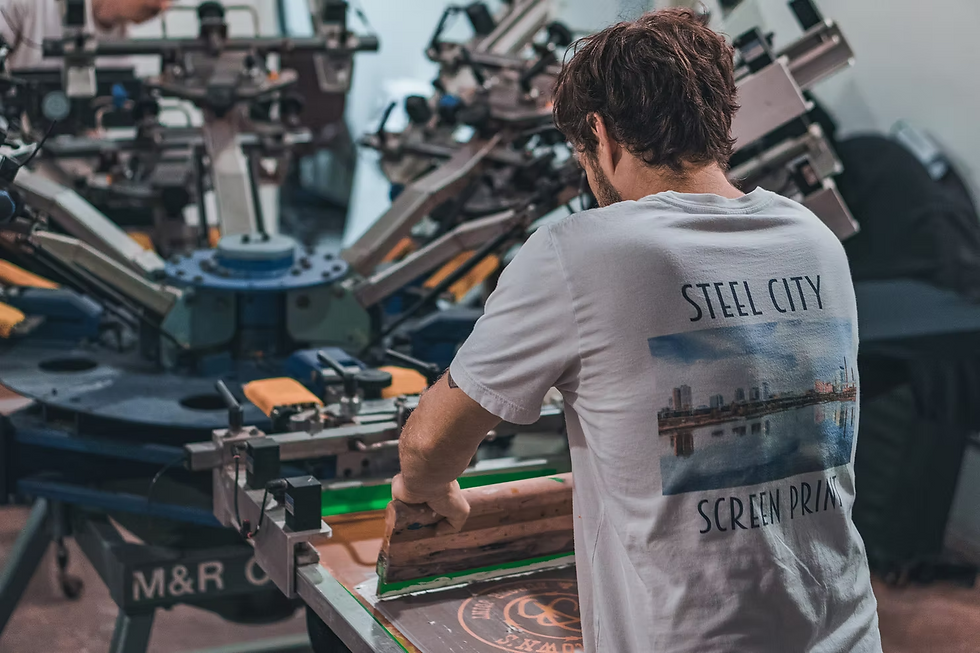
Automation plays a significant role in modern screen printing. Machines now handle tasks like mesh tensioning, exposure, and ink application, boosting precision and speed.
Digital hybrid systems combine traditional screen printing with digital printing. This approach allows for more detailed designs and quicker turnarounds without losing the texture typical of screen prints.
Laser engraving has replaced some manual screen making processes. It creates finer mesh patterns and improves consistency across multiple prints.
For more guidance, explore our blogs on screen printing in London and screen printing near me to find expert services and local printing options.
Eco-Friendly Practices
Many screen printing companies adopt water-based inks instead of plastisol to reduce harmful chemical use. These inks are less toxic and easier to clean up, benefiting the environment and worker safety.
Efforts to recycle materials are increasing. Screens, squeegees, and leftover inks are being repurposed or disposed of responsibly to minimise waste.
Energy-efficient dryers and ink curing methods lower electricity consumption, which helps print shops reduce their carbon footprint.
For those seeking screen printing London with a focus on sustainability, Stitch 99 incorporates eco-friendly practices and modern technology for outstanding, responsible results.
Current Market Trends
Customisation is growing in demand, with consumers seeking personalised apparel and products. On-demand screen printing London services are expanding to meet this preference, and Stitch 99 is at the forefront of this trend.
Sustainability influences purchasing choices. Brands like Stitch 99 highlight eco-friendly screen printing London techniques on labels and marketing materials to attract environmentally conscious customers.
Collaborations between designers and printers, such as those facilitated by Stitch 99, encourage limited-edition collections. These unique releases use screen printing London’s distinct qualities to create value and exclusivity.


Comments